
Introduction to The Hierophant
Picture this: you’re sitting across from your most trusted mentor, the one who always seems to know exactly what to say when life gets messy. That’s The Hierophant energy in a nutshell. As card number 5 in the Major Arcana, The Hierophant isn’t just another pretty face in your tarot deck. This card represents that perfect sweet spot between seeking wisdom from those who came before us and trusting our own inner compass.
Think of The Hierophant as your spiritual GPS system. While other cards might tell you to throw caution to the wind or follow your wildest impulses, The Hierophant gently reminds you that sometimes the scenic route through established traditions can be just as enlightening as blazing your own trail. This card embodies the teacher, the guide, the wise elder who’s seen it all and lived to tell the tale.
What makes The Hierophant particularly fascinating is how it challenges our modern obsession with doing everything ourselves. In a world where we’re constantly told to “trust your gut” and “make your own rules,” The Hierophant suggests that maybe, just maybe, there’s something to be said for learning from people who’ve already made all the mistakes we’re about to make.
For anyone diving deep into tarot, The Hierophant serves as a reality check. Yes, your intuition matters. Yes, your personal journey is unique. But there’s also incredible power in tapping into the collective wisdom that’s been passed down through generations. It’s like having access to humanity’s greatest hits playlist, spiritually speaking.
The Hierophant Keywords
Upright: Tradition, spiritual guidance, education, conformity, religion, mentorship, conventional wisdom, moral guidance
Reversed: Rebellion, unconventional beliefs, personal spirituality, dogma, restriction, questioning authority, breaking traditions
The Hierophant Upright Meaning
When The Hierophant shows up right-side up in your reading, it’s basically the universe’s way of saying, “Hey, maybe it’s time to ask for directions.” This isn’t about being weak or dependent. It’s about being smart enough to recognize that you don’t have to reinvent the wheel every single time you face a challenge.
The upright Hierophant often appears when you’re standing at a crossroads, feeling overwhelmed by options and unsure which path to take. Instead of spinning your wheels trying to figure everything out solo, this card suggests looking to established wisdom traditions, whether that’s enrolling in a course, joining a spiritual community, or simply asking someone you respect for their honest opinion.
There’s something beautifully humbling about The Hierophant’s message. In our Instagram-perfect world where everyone’s supposed to be their own guru, this card reminds us that learning from others isn’t admitting defeat. It’s actually one of the smartest things you can do. Think about it: would you rather spend years making the same mistakes everyone else has already made, or would you prefer to learn from their experiences and skip ahead to the good stuff?
The upright Hierophant also has this wonderful way of highlighting your own potential as a teacher or mentor. You might be surprised to discover that people are already looking to you for guidance in areas where you have hard-won experience. There’s something deeply satisfying about realizing you’ve become the person others turn to for wisdom.
This card loves structure, routine, and time-tested approaches. While that might sound boring to some, there’s actually tremendous freedom in having a solid foundation to build upon. It’s like learning to paint: you need to understand the basics before you can create your masterpiece.
The Hierophant Reversed Meaning
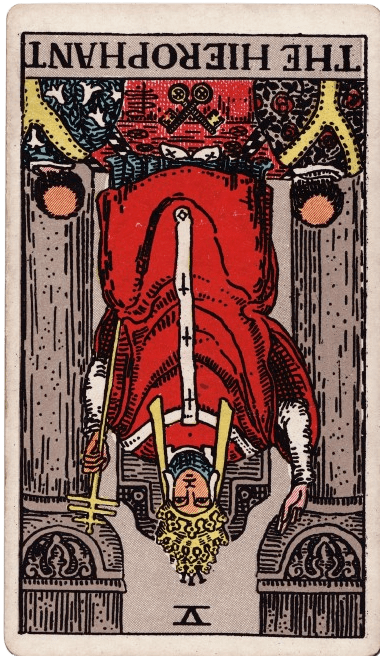
Flip The Hierophant upside down, and suddenly you’re dealing with a completely different energy. The reversed Hierophant is your inner rebel coming out to play, and honestly? Sometimes that’s exactly what’s needed.
When this card appears reversed, it’s often because you’ve been following someone else’s rulebook for so long that you’ve forgotten you’re allowed to write your own. Maybe you’ve been going through the motions in a spiritual practice that no longer resonates, or perhaps you’re trapped in a career path that looks good on paper but feels soul-crushing in reality.
The reversed Hierophant can be incredibly liberating. It gives you permission to question everything you’ve been told is “the right way” to do things. This doesn’t mean becoming a contrarian just for the sake of it, but rather developing the confidence to trust your own moral compass even when it points in a different direction than everyone else’s.
Sometimes, though, the reversed Hierophant reveals the shadow side of rebellion. There’s a difference between thoughtful questioning of authority and knee-jerk rejection of anything that smells like tradition. This card can appear when you’re being rebellious just to prove a point, even when following established wisdom would actually serve you better.
The reversed Hierophant also highlights issues with rigid thinking and dogmatic approaches. You might be encountering people or institutions that are so stuck in their ways they can’t adapt to new information or changing circumstances. In these cases, the card encourages you to trust your instincts and seek alternative approaches.
The Hierophant Symbolism
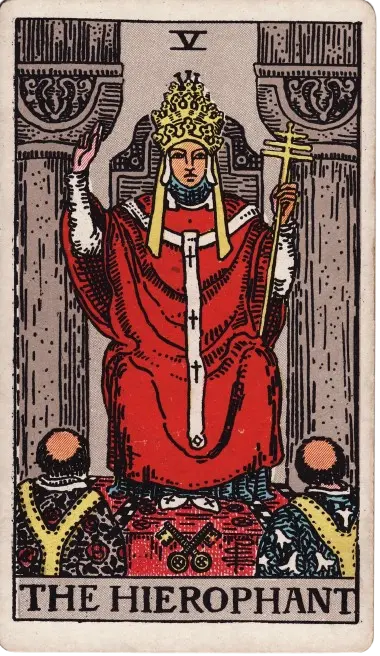
The imagery of The Hierophant is like a masterclass in symbolic storytelling. Picture a religious figure seated between two pillars, and you’re immediately understanding something profound about balance and mediation. Those pillars aren’t just decorative; they represent the eternal tension between the material and spiritual worlds, and The Hierophant sits right in the middle, helping bridge that gap.
That elaborate outfit isn’t just for show either. The religious vestments symbolize authority that’s been earned through dedication and study, not just grabbed for the sake of power. The triple crown is particularly interesting because it represents different levels of consciousness. It’s like wearing a reminder that true spiritual authority touches every aspect of human experience: body, mind, and spirit.
Those keys at his feet are loaded with meaning. They’re not just symbols of unlocking mysteries; they represent the serious responsibility that comes with spiritual knowledge. Having the keys to wisdom means you’re accountable for how you use and share that knowledge.
The two students kneeling before The Hierophant tell their own story about teaching and learning. Their different colored robes suggest that while core spiritual principles remain constant, the way we teach and learn must be adapted to individual needs and circumstances. It’s a beautiful reminder that one size doesn’t fit all when it comes to spiritual growth.
Historical Context & Archetype of The Hierophant
In the earliest tarot decks, this card didn’t even bother being subtle—it was literally “The Pope.” He was the spiritual CEO, the one who decided what counted as sacred and what didn’t. As tarot moved away from explicitly Christian imagery and into something more universal, “The Pope” morphed into “The Hierophant,” a title that sounds less like Sunday mass and more like “keeper of mysteries.”
Archetypally, The Hierophant is the translator between worlds. He sits at the doorway between divine mystery and everyday life, taking big spiritual concepts and turning them into rituals, traditions, and teachings you can actually use. He’s the mentor who says, “Yes, your feelings matter—but have you tried a structure?”
His Taurus energy shows up in his love of consistency and slow, steady growth. There’s nothing flashy here, nothing overnight. At his best, The Hierophant embodies ethical leadership: someone who carries wisdom carefully, honors lineage, and understands that what we teach shapes people’s lives. At his worst, he turns into the voice of “because that’s how it’s always been,” clinging to rules that no longer serve. The work with this archetype is learning how to separate living wisdom from dead tradition—and deciding what you actually want to inherit.
The Hierophant as a Person: Personality and Characteristics
If The Hierophant walked into your life as a person, you’d probably clock them as “the responsible one” within five minutes. They’re the friend who reads the fine print, remembers the holiday rituals, and somehow knows the unspoken rules of every room they walk into. People naturally ask them for advice, partly because they’re informed, and partly because they actually care about giving a thoughtful answer.
This person values structure. They like systems, routines, step-by-step plans. Not because they’re boring, but because they genuinely believe that commitment and consistency are how you build a life that doesn’t fall apart in a crisis. They’re big on ethics and integrity; cutting corners makes them itchy.
As a partner, Hierophant energy gravitates toward long-term commitment and shared values. They’re the type who wants to talk about “Where is this going?” and actually means it. As a boss or mentor, they can be incredibly supportive if you’re willing to respect the process. They’ll show you the ropes, introduce you to the right people, and walk you through the unofficial rules no one writes down.
In shadow, this same energy can get judgy, rigid, or weirdly controlling. Hierophant types can default to “my way is the right way” and struggle with unconventional choices. But when they’re balanced, they’re the rock: wise, stable, and quietly devoted to helping you grow without losing yourself.
The Hierophant in a Love Reading
When The Hierophant appears in love readings, it’s bringing some seriously traditional energy to your romantic life. This isn’t necessarily a bad thing, despite what our culture of casual dating might have you believe.
Upright, The Hierophant in love often signals that it’s time to get serious about commitment. We’re talking engagement rings, wedding planning, meeting the parents, and all those milestone moments that make relationships feel real and lasting. This card loves the idea of relationships that are supported by community and family, partnerships that feel solid and socially recognized.
For single people, The Hierophant suggests you might meet your person through traditional channels. Think religious communities, family introductions, professional networks, or educational settings. It’s less “meet-cute at a dive bar” and more “introduced by mutual friends at a dinner party.”
If you’re already in a relationship, The Hierophant can indicate a desire to formalize things or take the next step toward building something lasting together. This might involve conversations about marriage, kids, buying property together, or other ways of weaving your lives more completely together.
The reversed Hierophant in love readings tells a different story entirely. This card can appear when you’re challenging conventional relationship expectations or choosing arrangements that work for you but might raise eyebrows in more traditional circles. Maybe you’re in a long-distance relationship, choosing not to marry, or navigating some other non-traditional setup.
Sometimes the reversed Hierophant indicates conflicts over fundamental values and beliefs. You and your partner might be discovering that you have very different ideas about commitment, family, religion, or other core issues. This card encourages honest communication about these differences rather than pretending they don’t matter.
The Hierophant in a Career Reading
Career-wise, The Hierophant is all about working within established systems and following traditional paths to success. This card often appears for people in fields like education, law, government, healthcare, or religious organizations where institutional knowledge and proper procedures are crucial.
When upright, The Hierophant suggests that career advancement will come through earning the right credentials, finding good mentors, and proving yourself within existing organizational structures. This might mean going back to school, pursuing professional certifications, or taking on roles that require you to work your way up through established hierarchies.
The upright Hierophant loves formal training programs, apprenticeships, and any situation where you’re learning from people who’ve already mastered their craft. It’s less about disrupting industries and more about becoming excellent within existing frameworks.
The reversed Hierophant in career readings can indicate frustration with bureaucratic limitations or a desire to break free from traditional corporate structures. You might be feeling stifled by office politics, meaningless procedures, or institutional cultures that prioritize conformity over innovation.
Sometimes the reversed Hierophant appears when your fresh ideas or unconventional approaches are meeting resistance from traditional authorities. This card can encourage you to find ways to work outside established systems or to be more strategic about how you introduce change within existing organizations.
The reversed Hierophant can also suggest entrepreneurial ventures or career paths that don’t fit neatly into conventional categories. If you’re feeling called to create your own opportunities rather than climbing someone else’s ladder, this card validates that instinct.
The Hierophant in a Yes No Reading
In a yes no tarot reading, The Hierophant is generally a “yes” card, but with important conditions attached. When upright, it’s saying yes to traditional approaches, formal commitments, and working within established systems. The catch is that this yes comes with an expectation of patience and proper procedure.
The upright Hierophant’s affirmative answer suggests that success will come through conventional methods rather than innovative shortcuts. If you’re asking about starting a business, the card might say yes but recommend traditional business planning and established industry practices rather than trying to disrupt everything from day one.
When reversed, The Hierophant’s answer becomes more complicated. It might be saying “yes, but not through traditional means” or “no, if you insist on following conventional approaches.” This card often appears when the questioner needs to think outside established parameters to achieve their goals.
The reversed Hierophant can also indicate that while your desired outcome is possible, it might require challenging authority or breaking some rules along the way. This isn’t necessarily bad, but it does suggest that you should be prepared for potential pushback or complications.
Spiritual Meaning of The Hierophant
Spiritually speaking, The Hierophant is like a wise librarian in the great library of human spiritual experience. This card reminds us that while personal spiritual insights are valuable and necessary, we don’t have to figure everything out from scratch.
The upright Hierophant encourages connection with spiritual communities, study of traditional texts, and learning from experienced teachers. There’s something humbling and beautiful about recognizing that spiritual seekers throughout history have grappled with the same questions you’re facing now, and many of them have left behind wisdom that can guide your journey.
This doesn’t mean blindly accepting everything you’re taught, but rather approaching traditional spiritual wisdom with respect and openness. The Hierophant suggests that even if you ultimately choose a different path, understanding what came before you will make your own spiritual journey richer and more informed.
When reversed, The Hierophant can indicate the need to develop a more personal relationship with the divine, free from institutional dogma or external authority. Sometimes spiritual growth requires breaking away from organized religion or challenging spiritual teachers who have become too rigid or controlling.
The reversed Hierophant can also represent a phase of spiritual rebellion, where you’re rejecting all traditional wisdom in favor of purely personal exploration. While this can be necessary and healthy, the card also warns against throwing the baby out with the bathwater. Even in rebellion, there’s wisdom to be found in understanding what you’re rebelling against.
Cosmic Connections of the Hierophant
The Hierophant’s connection to Taurus makes perfect sense when you think about it. Taurus energy is all about stability, persistence, and appreciation for time-tested approaches. Like a bull that knows its own strength, The Hierophant represents the power of steady, consistent progress through established methods.
This Taurus connection also explains The Hierophant’s relationship with material security and practical spirituality. This isn’t pie-in-the-sky mysticism; it’s about finding ways to integrate spiritual wisdom into daily life in concrete, measurable ways.
Numerologically, The Hierophant carries the energy of the number 5, which represents change, freedom, and the challenge of balancing individual desires with collective needs. This might seem contradictory given The Hierophant’s traditional associations, but it actually makes perfect sense. The card is all about navigating the tension between personal growth and social responsibility.
The Earth element connection grounds The Hierophant in practical reality. This card isn’t about escaping the material world but rather about finding spiritual meaning within it. Earth energy reminds us that spiritual development needs to be sustainable and applicable to real-world situations.
Questions to Ask When The Hierophant Appears
When The Hierophant shows up in your reading, it’s time for some serious self-reflection. Start by asking yourself “what traditional wisdom or established knowledge could help with your current situation?” This isn’t about being unoriginal; it’s about being smart enough to learn from others’ experiences.
Consider who the mentors and teachers are in your life, and how you can better learn from their experience and wisdom. Sometimes we get so focused on being independent that we miss opportunities to benefit from others’ hard-won insights.
Examine where you might be too rebellious, rejecting beneficial traditions just for the sake of being different, and where you might be too conformist, not thinking for yourself when you should be. The Hierophant is all about finding that sweet spot between honoring tradition and maintaining individual autonomy.
Finally, reflect on “how you can honor both your personal spiritual insights and the wisdom of established spiritual traditions?” This question gets to the heart of what The Hierophant teaches: that the best spiritual development comes from integrating personal experience with collective wisdom.
Guided Action: Meditation & Affirmation for The Hierophant
Here’s a simple Hierophant-inspired practice you can actually fit into a real-life day. Sit somewhere you feel safe—bed, couch, corner of a café with your headphones in—and close your eyes. Imagine stepping into a space that feels sacred to you personally: a temple, an old library, your grandmother’s kitchen, a quiet sanctuary where no one is rushing you.
Across from you sits a wise teacher. You don’t need to see their face clearly; just feel that they’re steady, kind, and deeply on your side. Ask them, silently: “What tradition, practice, or piece of wisdom would actually support me right now?” Then pause. Let the first honest, grounded answer rise—no performance, no perfection.
You can seal the moment with a few affirmations:
- I am ready to learn from wisdom that truly serves me.
- I honor my teachers while trusting my own inner guidance.
- I am building a life rooted in values, not just impulses.
Yes No Tarot’s Take
At Yes No Tarot, we take a heart-centered approach to tarot. We believe tarot is a tool to discover your own intuitive wisdom. This is our take on The Hierophant: Your soul is asking you to find your teachers, your lineage, your spiritual home. But here’s the twist – you get to choose what wisdom serves you and what doesn’t. The Hierophant isn’t about blind obedience; he’s about conscious devotion to what expands your heart and connects you to something greater. Honor the traditions that light you up. Question everything else.
The Bottom Line
The Hierophant ultimately challenges us to become more sophisticated in our thinking about tradition and authority. This card isn’t about blind conformity or rebellious rejection of everything established. Instead, it’s about developing the discernment to recognize valuable wisdom wherever it comes from.
Whether The Hierophant appears upright or reversed, it’s asking you to examine your relationship with learning, teaching, and the balance between individual insight and collective knowledge. In a world that often presents these as opposing forces, The Hierophant suggests they’re actually complementary aspects of human growth and development.
The most powerful lesson of The Hierophant is that wisdom is cumulative. Every generation builds on what came before, adding their own insights while preserving what remains valuable from the past. Your personal spiritual journey doesn’t exist in a vacuum; it’s part of a larger human story that stretches back thousands of years and will continue long after you’re gone.
True spiritual maturity, according to The Hierophant, involves honoring both your individual spiritual journey and your connection to the larger human spiritual heritage. It’s about being humble enough to learn from others while confident enough to trust your own experience. In the end, that’s not just good spiritual advice; it’s a pretty solid approach to life in general.