Is the Death card a Yes or No card?
Death is generally a NO for the current path — transformation has to come first. This card supports endings, closure, and clearing space for what’s next, but says no to forcing the existing situation forward. If you’re willing to let something go, what comes after often opens up.
Table of Contents
Introduction to The Death Card
Look, we need to have a conversation about the Death card. Yes, that one. The thirteenth card in the Major Arcana that makes everyone’s face go white when it shows up in a reading. Here’s the thing: despite what every horror movie has taught you, this card isn’t actually predicting your demise. It’s doing something far more interesting and arguably more terrifying for some people. It’s telling you that change is coming, and you can either fight it or flow with it.
The Death card is tarot’s ultimate truth-teller about transformation. When this card appears in your spread, it’s essentially tapping you on the shoulder and saying, “Hey, something in your life needs to end so something better can begin.” It’s about cycles, renewal, and the kind of deep change that happens when you finally let go of what’s been holding you back.
Think of it this way: you know that feeling when you’re in a relationship that’s clearly over, but you’re both too scared to say it out loud? Or when you’re stuck in a job that’s slowly killing your soul, but the idea of starting over feels impossible? That’s exactly when the Death card shows up to remind you that staying in stagnant situations isn’t protecting you. It’s just postponing the inevitable growth that’s waiting on the other side of letting go.
The Death Card Keywords
Upright: Transformation, endings, new beginnings, rebirth, release, letting go, transition, change, renewal, metamorphosis
Reversed: Resistance to change, stagnation, fear of endings, avoiding transformation, clinging to the past, incomplete transitions, forced change, decay
The Death Card Upright Meaning
When the Death card appears upright in your reading, it’s actually bringing good news wrapped in scary packaging. This card is saying that you’re ready for a major transformation, and more importantly, you have the strength to handle it. It’s like getting a promotion that requires moving to a new city. Scary? Yes. Ultimately beneficial? Absolutely.
This card loves to show up during those pivotal moments when you’re outgrowing your current situation. Maybe you’re realizing that the person you were five years ago wouldn’t recognize the person you’re becoming, and that’s exactly as it should be. The upright Death card is your cosmic cheerleader, encouraging you to lean into this evolution instead of fighting it.
Here’s what makes this card particularly powerful: it’s not just about random change for change’s sake. It’s about necessary transformation. The kind that happens when you finally admit that your current approach isn’t working, or when you realize that the version of yourself you’ve been trying to maintain is actually too small for who you’re becoming.
The upright Death card often appears when you’re approaching the end of a significant chapter. This could be anything from a long-term relationship that’s run its course to a career path that no longer aligns with your values. The card isn’t mourning these endings. It’s celebrating them as necessary steps toward something more authentic and fulfilling.
What’s particularly beautiful about this card’s upright position is how it handles timing. It suggests that this transformation isn’t being forced on you. You’re ready for it, even if you don’t feel ready. Your subconscious mind has already started the process of letting go, and now your conscious mind just needs to catch up and cooperate with what’s already in motion.
The Death Card Reversed Meaning
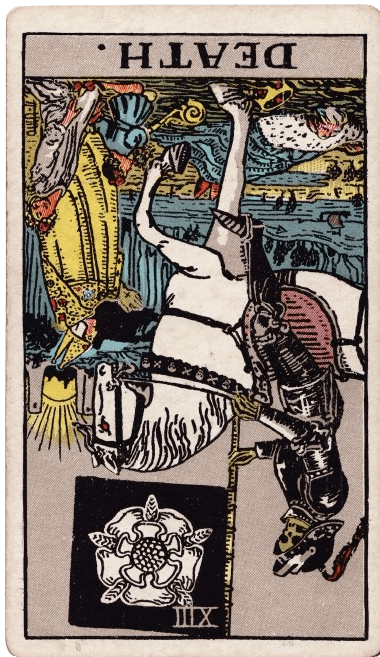
The reversed Death card is where things get a bit more complicated, and honestly, a bit more relatable for most of us. This position is the tarot equivalent of digging your heels in when someone suggests it might be time to update your dating profile or consider a career change. It’s resistance personified.
When Death shows up reversed, it’s usually pointing to areas where you’re clinging to situations that have expired. We’ve all been there. You know that friend who stayed in a toxic relationship for three years longer than they should have because the devil you know feels safer than the devil you don’t? That’s reversed Death energy in action.
This reversal often indicates that you’re aware change needs to happen, but you’re scared of what comes next. Maybe you’re staying in a job that bores you to tears because at least it pays the bills, or maybe you’re avoiding having that difficult conversation with your partner because it might mean the end of your relationship. The reversed Death card sees through these delaying tactics and calls them what they are: fear masquerading as practicality.
Another way this reversal shows up is through incomplete transformations. You know when you decide to “reinvent yourself” and you change your hair and buy new clothes, but you never actually address the underlying patterns that got you into trouble in the first place? That’s classic reversed Death. It’s surface-level change that doesn’t touch the root of what needs to transform.
Sometimes this card reversed indicates that change is happening to you rather than with you. When we resist natural transitions for too long, life has a way of making those changes unavoidable. The reversed Death card can be a warning that if you don’t make conscious choices about what needs to end, those choices might be made for you in less comfortable ways.
The Death Card Symbolism
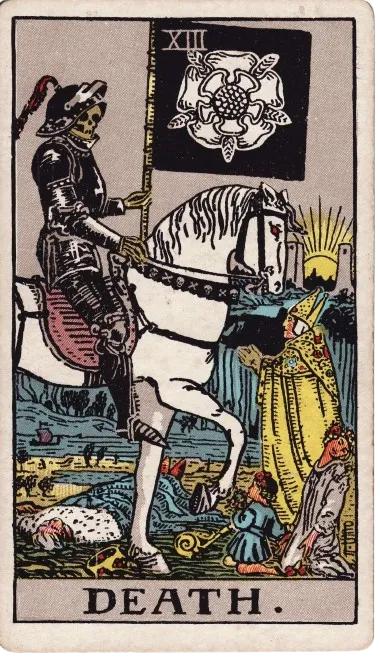
The traditional imagery of the Death card is rich with meaning that goes far beyond its obvious associations. In most decks, you’ll see a skeleton in armor riding a white horse, carrying a black banner with a white rose. Every element here is intentional and loaded with symbolism that speaks to transformation rather than literal death.
The skeleton represents what remains when everything superficial falls away. It’s not meant to be morbid. It’s meant to represent the eternal essence of who you are beneath all the roles, identities, and masks you wear. The armor suggests protection during vulnerable periods of change, while the white horse symbolizes the pure intention behind necessary transformation.
That black banner with the white rose? It’s one of the most hopeful symbols in the entire tarot deck. The rose represents beauty and new life emerging from what appears to be destruction. It’s saying that what looks like an ending is actually the beginning of something more beautiful than what came before.
The various figures in the card represent different responses to change. There’s usually a fallen king, representing how even the most powerful positions must eventually yield to transformation. A child and woman often appear, symbolizing innocence and intuitive wisdom that can navigate change more gracefully than rigid thinking.
The landscape typically includes a river flowing through the scene, representing the continuous flow of life that carries us through all changes. Water appears in many Death cards because it symbolizes emotional cleansing and renewal. In the background, you might see mountains representing the eternal aspects of existence that remain stable even during dramatic transitions.
Many versions also include a rising sun on the horizon, representing new beginnings emerging from endings. This isn’t subtle symbolism. The card is practically shouting that transformation leads to renewal and that dawn always follows darkness.
Historical Context & Archetype of The Death Card
Before the Death card became the star of every “spooky tarot” meme, it was just doing its job in medieval Europe: reminding people that nothing—and no one—gets out alive. In early decks like the Tarot de Marseille, this trump wasn’t even labeled. It was simply a skeletal figure with a scythe, cutting down kings and peasants alike. People back then lived with war, plague, and famine as background noise, so the card wasn’t melodramatic. It was honest.
Later, when occultists like the Golden Dawn and Arthur Edward Waite reworked tarot, the Death card got a glow-up. In the Rider–Waite–Smith deck, Death rides in on a white horse, armored and weirdly dignified, carrying a black banner with a white rose. The sun rises in the background. The message shifts from “you’re doomed” to “you’re done with this version of your life.”
Archetypally, Death is the threshold guardian. It’s the part of your psyche that says, “You can’t drag that old identity through this door.” Think of it as compost energy: the situations, roles, and versions of you that collapse here become the raw material for your next chapter.
The Death Card as a Person: Personality and Characteristics
If the Death card showed up as a person at your dinner party, they’d probably make everyone slightly uncomfortable—but in a way you’d be thinking about for weeks. They’re the friend who skips the small talk and goes straight to, “So, are you actually happy, or just attached to the familiar?”
This person feels very Scorpio-coded: intense, perceptive, emotionally deep, and allergic to pretending. They notice what’s no longer working long before you’re ready to admit it. They’re not cruel, but they’re not big on sugarcoating either. Their vibe is, “I love you, and that’s why I’m not going to let you stay where you’re shrinking.”
In real life, Death energy looks like someone in the middle of a major life pivot—divorce, coming out, career overhaul, sobriety, spiritual awakening. Or it’s the person who walks with others through those endings: therapists, grief workers, doulas, coaches, that one friend who shows up when everything falls apart with snacks, a trash bag, and a plan.
Around them, half-measures don’t last. You either cling harder to what’s dying or you finally exhale and let it go.
The Death Card in a Love Reading
When the Death card shows up in a love reading, it’s rarely predicting the literal end of your relationship (though it can suggest that if the relationship truly isn’t serving either of you). More often, it’s saying that something about how you approach love and relationships needs to transform.
If you’re single, this card might be pointing to patterns in your dating life that need to end. Maybe you keep attracting the same type of unavailable person, or maybe you’re still carrying emotional baggage from past relationships that’s preventing you from being open to new love. The Death card is suggesting it’s time to let those old patterns die so you can show up differently in future relationships.
For those in relationships, the Death card can indicate that your partnership is ready to evolve to a new level. This might mean old ways of communicating need to be replaced with more honest, vulnerable conversations. It could suggest that roles or dynamics that worked in the past are no longer serving the relationship you’re trying to build.
When reversed in love readings, this card often points to relationships that have become stagnant because one or both partners are afraid of necessary changes. Maybe you’re both avoiding conversations about the future because they might reveal that you want different things. Or perhaps you’re staying together out of habit rather than genuine connection and growth.
The reversed Death card in love can also indicate that you’re avoiding the grief process necessary to heal from past relationships, keeping you emotionally unavailable for new connections. Sometimes we need to fully feel and release the pain of what ended before we can embrace what’s beginning.
The Death Card in a Career Reading
Professionally, the Death card often shows up during periods of significant career transformation. This might mean your current job is ending, but it could also mean that your entire approach to work and success is evolving. The card particularly favors careers that involve helping others through transitions, like coaching, counseling, or any field where you guide people through change.
The upright Death card in career readings can indicate that you’re outgrowing your current role or that industry changes require adaptation. It might suggest that skills or professional identities you’ve relied on need to be updated or replaced entirely. This isn’t necessarily bad news. It’s often pointing toward opportunities for growth and advancement that require you to stretch beyond your comfort zone.
When reversed professionally, this card may indicate resistance to necessary career changes or clinging to jobs that no longer serve your growth. You might be staying in a position out of fear rather than excitement, or avoiding the professional development necessary to remain relevant in your field.
The reversed Death card can also suggest that workplace changes are happening too quickly for healthy adaptation, or that you’re forcing career moves before laying proper groundwork. The key is finding balance between embracing necessary professional evolution and maintaining stability during periods of change.
The Death Card in a Yes No Reading
In yes/no readings, the Death card is rarely a straightforward answer. When upright, it usually suggests “yes, but with significant change required” or “yes, after you let go of what’s holding you back.” This isn’t a simple yes card. It’s asking you to consider what must end for your desired outcome to manifest.
The upright Death card suggests that success is possible, but transformation is non-negotiable. If you’re asking about new opportunities or relationships, the card indicates favorable outcomes after you’ve released what no longer serves you. The timing suggested by this card varies widely because transformation processes unfold according to their own rhythm rather than forced timelines.
When reversed in yes/no readings, the Death card often suggests “no” or “not yet” because necessary changes are being resisted. This reversal might indicate that fear of change is preventing the positive outcome you’re seeking, or that preliminary transformations need to be completed before your question can be answered favorably.
Spiritual Meaning of The Death Card
Spiritually, the Death card represents the process of ego death and spiritual rebirth that characterizes authentic spiritual growth. This card embodies the understanding that the false self, composed of limiting beliefs and attachments, must dissolve for the true self to emerge.
The spiritual journey depicted by the Death card involves recognizing that what we fear losing was never truly ours to begin with. This card teaches that clinging to temporary forms prevents us from experiencing the eternal essence that continues through all changes. It suggests that spiritual maturity requires developing comfort with impermanence.
The Death card also speaks to the spiritual alchemy of turning life’s challenges into wisdom and compassion. Each ending we navigate with grace becomes a doorway to greater spiritual understanding and the ability to help others through their own transformative journeys.
When reversed spiritually, the Death card indicates resistance to growth or avoiding difficult spiritual lessons. This might involve clinging to comfortable but limiting spiritual concepts or resisting the ego dissolution that deeper spiritual practice requires.
Cosmic Connections of The Death Card
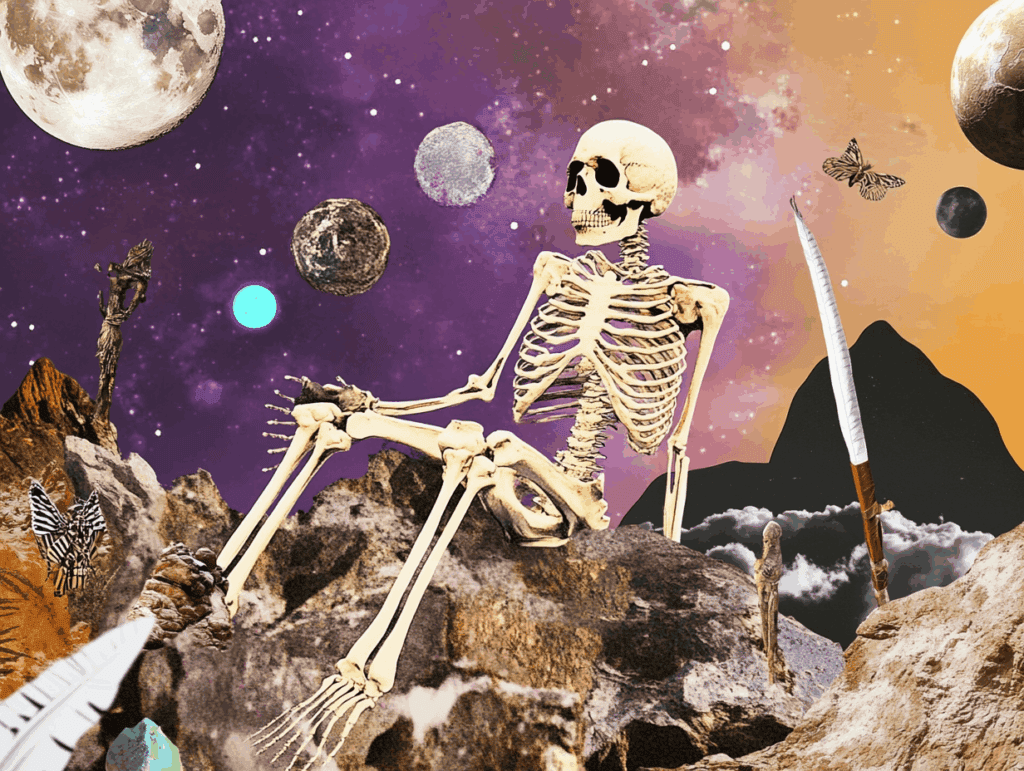
Astrologically, the Death card is associated with Scorpio, which perfectly aligns with the card’s emphasis on transformation and depth. Scorpio energy is penetrating, transformative, and unafraid of exploring life’s mysteries. This connection emphasizes the card’s message about embracing transformation as a path to greater authenticity.
As the thirteenth card of the Major Arcana, the Death card carries the numerological energy of transformation and renewal. The number thirteen has long been associated with death and rebirth in various traditions, representing the end of one cycle and the beginning of another.
Elementally, the Death card connects to Water, representing the emotional and intuitive aspects of transformation. Water dissolves old forms and nourishes new growth, explaining why the Death card often involves emotional or spiritual purification as part of the transformation process.
Questions to Ask When The Death Card Appears
When the Death card shows up in your reading, consider these questions: What in your life is ready to end or transform? Where are you resisting necessary change out of fear? What old patterns or situations are you holding onto that no longer serve you?
Also ask yourself: How can you embrace transformation with grace? What needs to end for something better to begin? Where might you be forcing change instead of allowing natural transformation? What wisdom can this period of transition offer you?
Guided Action: Meditation & Affirmation for The Death Card
Here’s a simple Death card ritual for when you know something needs to end but you’re still white-knuckling it.
Sit somewhere quiet with the Death card in front of you. Take a few slow breaths. Imagine a doorway behind the figure on the card. On your side of the doorway is your current life: the job, relationship, habit, or story you’ve outgrown but keep trying to squeeze into. On the other side is… not a detailed plan, just a feeling: lighter, clearer, more honest.
Now picture gathering whatever you’re ready to release into a small box—names, memories, fears, expectations. See Death take the box from you and carry it through the doorway. You don’t chase it. You just let it go.
Repeat, out loud if you can:
“I allow what’s finished to fall away. Every ending makes room for a truer beginning.”
Notice what softens in your body. Often, that tiny bit of loosened grip is where the real transformation starts.
Yes No Tarot’s Take
At Yes No Tarot, we take a soul-centered approach to tarot. We believe tarot is a tool to discover your own intuitive wisdom. This is our take on The Death Card: Something in your life has reached its expiration date. Death is not the enemy; resistance to change is. Your soul is ready to shed the skin that no longer fits, to release the patterns and relationships and identities that have served their purpose. This isn’t about loss; it’s about liberation. What are you ready to let go of so something better can be born?
The Bottom Line
The Death card ultimately teaches us that transformation isn’t just natural but necessary for authentic growth. Whether upright or reversed, this card reminds us that endings aren’t failures but doorways to new possibilities. The key is learning to trust the wisdom of natural cycles and approach transformation with courage rather than fear.
This card encourages us to release our grip on what’s temporary and find peace in what remains constant through all changes. The Death card’s message is ultimately one of liberation and renewal, reminding us that every ending contains the seeds of a new beginning, and that our willingness to let go creates space for experiences and opportunities perfectly aligned with who we’re becoming.
So the next time the Death card shows up in your reading, take a deep breath and remember: it’s not predicting doom. It’s predicting transformation. And sometimes, that’s exactly what we need most.