
Let’s be real for a second: trying to memorize the meanings of 78 different Tarot cards is overwhelming. It feels a bit like trying to learn a new language by reading the dictionary cover to cover. You might get the definitions right, but you won’t know how to speak the language. Most beginners get stuck here. They memorize that The Tower is bad and The Star is good, but when they pull a five-card spread, it just looks like a disjointed mess of images.
Here’s the secret that changed everything for me: The Major Arcana isn’t a random shuffle of archetypes. It’s a movie.
Specifically, it’s a chronological narrative called The Fool’s Journey. It’s the oldest story in the book—literally the “Hero’s Journey“—charting the path of a human soul from the innocence of birth, through the messiness of adulthood, all the way to spiritual enlightenment.
When you stop looking at the cards as isolated flashcards and start seeing them as chapters in a book, your readings shift. You stop panic-Googling meanings and start spotting tarot narratives. You can see exactly where you (or your client) are in the plot line. Are they in the messy middle? The triumphant beginning? The painful climax?
Let’s walk through the script.
The Protagonist: The Fool’s Journey
Before we get into the drama, we have to meet our main character. In the Tarot, that’s Card 0: The Fool.
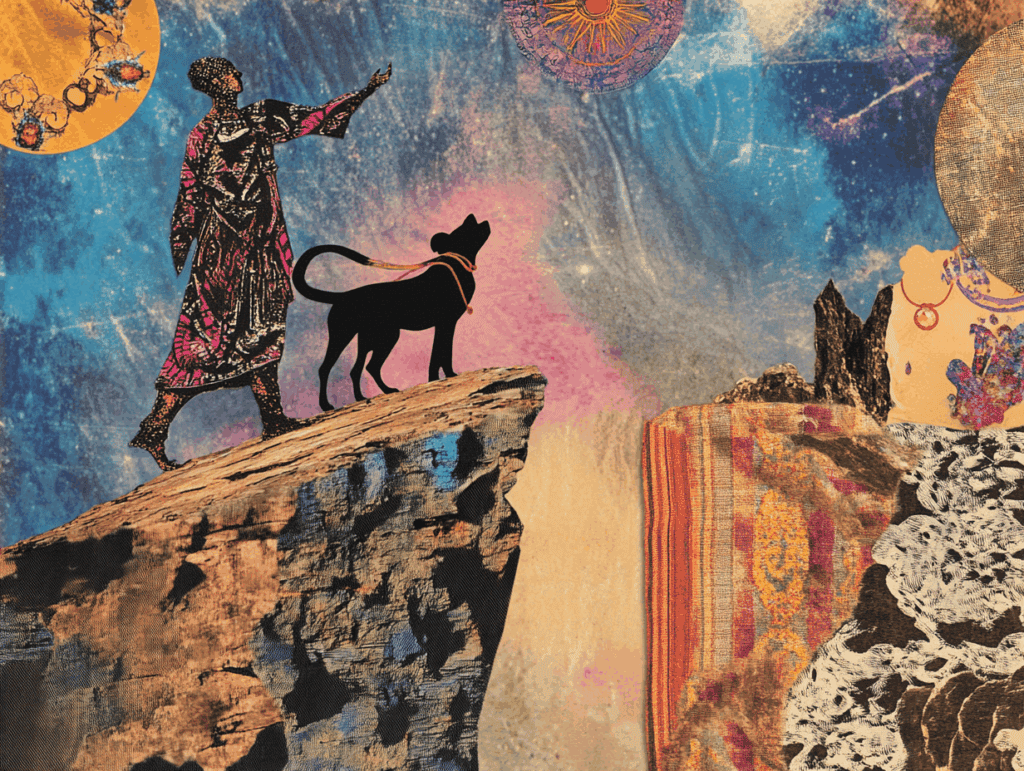
Notice the zero? That’s important. He’s not card number one because he hasn’t actually started the game yet. He’s the container for everything that could happen. In the classic Rider-Waite-Smith deck, he’s that guy standing on the edge of a cliff, looking up at the sky, totally oblivious to the drop, with a little dog trying to warn him.
He represents the “leap of faith.” You know that feeling when you start a new relationship, launch a business, or move to a new city? That buzzing, naive, terrifying excitement? That’s The Fool. He has zero baggage. He doesn’t know he’s going to get his heart broken or lose his money later in the story. He just knows he wants to go. In the Major Arcana story, the Fool is us before life gets its hands on us. He’s pure potential energy, ready to jump.
Act I: The World of Society (Cards 1–7)
Theme: The Conscious Mind and Ego Development
So, the Fool jumps off the cliff. Where does he land? Smack in the middle of the material world. The first seven cards (The Magician to The Chariot) are essentially Act I. Think of this as your childhood, your education, and your early twenties. It’s all about the Conscious Mind—building your ego and figuring out how to survive in society.
First, the Fool realizes he has tools. He meets The Magician (1), who teaches him willpower (“I can make things happen”), and The High Priestess (2), who teaches him intuition (“I can feel things”). It’s his crash course in how the universe works.
Then, inevitably, he meets the parents. The Empress (3) is the mother figure—all nurturing and creation—and The Emperor (4) is the father figure, laying down the laws and structure. This is where the Fool learns the rules. He goes to school under The Hierophant (5), figuring out what society expects of him, what to believe, and how to fit in.
Eventually, he has to grow up. The Lovers (6) isn’t just about romance; it’s that first moment of leaving the nest and choosing your own values over your parents’. It’s the first real independent choice.
Act I culminates in The Chariot (7). This is the Fool in his prime “hustle culture” era. He’s got the job, the car, the armor, and the accolades. He thinks he’s conquered the world because he’s successful on paper. He’s built a solid ego. But as we all know, looking good on Instagram is not the same as being happy.
Act II: The World Within (Cards 8–14)
Theme: The Subconscious Mind and Moral Questioning
In every good movie, the hero gets everything they thought they wanted, only to realize something is missing. That’s Act II. This is the journey into the Subconscious Mind. It’s the mid-life crisis, the therapy years, the “dark night of the soul.”
The Fool realizes that the armor he wore in The Chariot is actually heavy and suffocating. He learns that true power isn’t force; it’s Strength (8)—the ability to handle your own inner beasts with compassion. This realization makes him want to pull away from the rat race. He becomes The Hermit (9), going offline to find his own truth because the answers society gave him don’t fit anymore.
While he’s out there soul-searching, he runs into the Wheel of Fortune (10). He learns that life isn’t something you can control; it’s a cycle of ups and downs. This brings up questions of fairness, leading him to Justice (11), where he has to face the consequences of his past actions.
Then, things get sticky. He hits a wall. The old tricks don’t work. He ends up as The Hanged Man (12)—stuck, suspended, forced to surrender. He has to look at the world upside down to get it. This surrender leads to the scariest card in the deck: Death (13). But don’t freak out—this is ego death. It’s the shedding of the identity he built in Act I. The job title, the relationship status—it all goes.
Finally, after being taken apart, he starts to heal. Temperance (14) is the slow, patient process of putting the pieces back together, but differently this time. It’s alchemy. He’s finding a balance he never had before.
Act III: The Spiritual World (Cards 15–21)
Theme: The Superconscious Mind and Enlightenment
We’re in the home stretch. Act III is the Superconscious Mind. The Fool has conquered the world (Act I) and conquered himself (Act II). Now, he has to transcend everything.
But first, a final boss battle. Just when he thinks he’s enlightened, he meets The Devil (15). This is the shadow self—the addictions, the toxic patterns, and the chains we choose to wear. He has to face the parts of himself he hates. And usually, we don’t let those chains go willingly. The universe has to step in with The Tower (16). This is the lightning strike. The breakup, the job loss, the sudden realization that levels the playing field. It hurts, but it liberates him.
Standing in the rubble, he sees The Star (17). It’s pure hope, naked and vulnerable. He follows that light through The Moon (18), navigating the last bits of fear and illusion in his psyche.
And then? The sun comes out. The Sun (19) is the happiest card in the deck. It’s not the rigid success of The Chariot; it’s the pure, unadulterated joy of a child. He’s reborn.
He hears the call of Judgement (20), which is basically the universe saying, “Rise up, you’re ready.” He integrates every version of himself—the naive Fool, the warrior, the hermit, the sufferer.
And finally, The World (21). He’s done. He’s whole. He’s dancing in the center of the universe, fully connected to everything. It’s the “happily ever after.”
How to Spot the Narrative in a Spread
This framework isn’t just cool theory; it’s a massive help when you’re staring at a confusing spread. Next time you’re reading for yourself or a friend, look at the distribution of the cards.
- Stuck in Act I (Magician – Chariot): If the spread is heavy here, the issues are usually material. They’re worried about their job, their rent, or “defining the relationship.” It’s ego stuff. The advice needs to be practical and actionable.
- Wading through Act II (Strength – Temperance): This is transition territory. If they’re pulling these cards, they’re probably going through an identity crisis or an emotional pivot. They’re questioning who they are. The advice should focus on introspection and mental health.
- Deep in Act III (Devil – World): This is the heavy hitter zone. These are major karmic lessons and spiritual events. It’s less about “what should I do?” and more about “what is the universe trying to teach me?” It’s destiny work.
The ‘Plot Twist’ Tarot Spread
Sometimes we get so lost in the day-to-day drama that we forget which chapter we’re actually in. Are you in the “training montage” or the “dark night of the soul”? I made this spread to help you zoom out and see the arc.
Card 1: Current Chapter (Center)
- Focus Question: Where am I in the story right now?
- Interpretation: Check the Act. Are you building your foundation (Act I), facing an internal crisis (Act II), or wrapping up a massive spiritual lesson (Act III)? This is your “You Are Here” sticker.
Card 2: The Antagonist (Left)
- Focus Question: What is the main conflict or obstacle?
- Interpretation: Every protagonist needs an antagonist. This card represents the friction—whether it’s your own self-doubt or a literal person blocking your path—that is forcing the plot to move forward.
Card 3: The Resolution (Right)
- Focus Question: How do I turn the page to the next chapter?
- Interpretation: This is the bridge. It’s the specific action or mindset shift you need to resolve the conflict and get the story moving again.
Conclusion
The most beautiful thing about the Fool’s Journey? It’s a spiral, not a straight line. The second you reach The World (21) and feel that sense of completion, you step right off the edge and become The Fool (0) again. You start a new job, a new love, a new decade, and you’re back at the beginning, ready to do it all over again—just a little bit wiser this time.
So, don’t stress about memorizing the dictionary. Just look for the story. It’s already unfolding right in front of you.
