
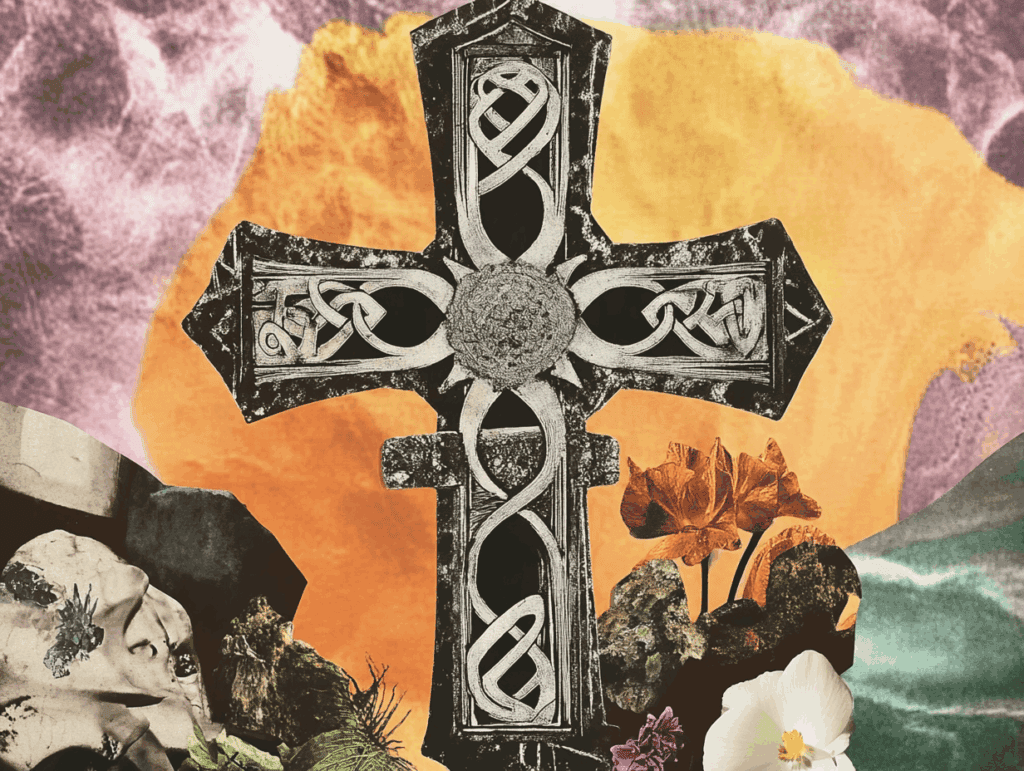
The Celtic Cross Spread is often the first layout people encounter when they pick up a deck of tarot cards, as it is the undisputed celebrity of the divination world. It’s the spread that shows up in every movie scene where a mysterious fortune teller reveals a dark secret, and it’s usually the first complex layout featured in every guidebook. However, just because it’s famous doesn’t mean it’s the right tool for every job.
In the world of tarot, there is a common misconception that more cards equate to more truth. We often feel like we aren’t “doing it right” unless we are sweating over a table covered in ten different pieces of cardstock. But let’s be real: sometimes, pulling ten cards for a simple question is the energetic equivalent of using a sledgehammer to hang a picture frame.
It is perfectly okay—even professional—to feel intimidated by this “10 card tarot spread.” The goal of a reading is clarity, not exhaustion. Understanding when to lean into this powerhouse and when to opt for something leaner is the hallmark of a seasoned reader.
What Exactly is the Celtic Cross? (The 10-Card Powerhouse)
To understand when to use the Celtic Cross, we first have to respect its architecture. This isn’t just a random pile of cards; it is a structured narrative. The spread is traditionally divided into two main sections: The Cross (the first six cards) and The Staff (the four cards on the right). Together, they create a comprehensive map of a person’s life at a specific moment in time.
The “celtic cross tarot spread meaning” is rooted in its ability to layer context. The Cross focuses on the immediate atmosphere—what is “covering” you, what is “crossing” you for better or worse, and what lies in your subconscious versus your conscious mind. It looks at the recent past that led you here and the immediate future that is already in motion.
Then, there is The Staff. This vertical line of four cards acts as the “why” and the “how.” It explores your internal psyche, the external influences of people around you, your deepest hopes or fears, and finally, the ultimate outcome if the current trajectory remains unchanged. It is a dense, “Tarot 101” powerhouse that leaves very few stones unturned.
Because it covers so much ground—past, present, future, and the psychological shadows in between—it requires a level of focus that simple spreads don’t. It’s not just about what is happening; it’s about the intersection of your choices and your environment.
When You Should Use the Celtic Cross
The Celtic Cross is a marathon, not a sprint. You should pull this layout when you are ready to do the heavy lifting of introspection. It thrives in the “grey areas” of life where a simple “yes” or “no” doesn’t quite capture the nuance of the human experience.
The “Big Picture” Reading
There are moments in life that deserve a ceremony. When you are standing at the threshold of a New Year, celebrating a birthday, or navigating a massive life transition like a cross-country move, the Celtic Cross provides the high-level perspective you need. It acts as a “State of the Union” for your soul, helping you see the narrative arc of your year rather than just the hurdles of your week.
Complex Situations with Moving Parts
We’ve all had those “it’s complicated” relationships or career sagas. When a situation involves multiple people, office politics, or a tangle of emotional history, a 3-card spread might miss the “External Influences” that are pulling the strings. The Celtic Cross shines here because it specifically carves out space for the environment and the people around you, revealing how their energy is impacting your path.
Deep Psychological Inquiry
Sometimes, we aren’t looking for a prediction; we are looking for a “why.” If you find yourself repeating the same self-sabotaging patterns in your dating life or your finances, the Celtic Cross can act as a mirror. Position 3 (the subconscious) and Position 4 (the past) work together to show you the roots of your behavior. It’s a tool for those who want to know the “celtic cross tarot spread meaning” in relation to their own shadow work.
When You Have the Luxury of Time
This is non-negotiable. A proper 10-card reading requires at least 30 to 45 minutes of quiet meditation and study. You need time to see how the “Advice” card interacts with the “Outcome” card. If you have the afternoon to yourself with a cup of tea and a journal, the Celtic Cross is a beautiful way to commune with your deck.
- Use it for: Annual reflections and deep-dive soul searching.
- Use it for: Career pivots that involve multiple stakeholders.
- Use it for: Understanding the “why” behind recurring life obstacles.
- Use it for: When you need a roadmap, not just a direction.
When You Should Not Use the Celtic Cross
If the Celtic Cross is a deep-sea dive, sometimes you just need to dip your toes in the water. One of the biggest mistakes “tarot spreads for beginners” often lead to is over-complicating a simple energy. At YesNoTarot.com, we believe in the power of directness. Here is when you should definitely put the 10-card spread back in the box.
Simple “Yes or No” Questions
If your question is “Should I buy this latte?” or “Will he text me back today?”, pulling ten cards is an exercise in futility. This leads to what I call “Tarot Word Vomit.” When you ask a binary question and receive ten multifaceted answers, the message becomes diluted. You’ll end up staring at the Tower and the Three of Swords for a simple “yes” question, sending yourself into an unnecessary spiral of anxiety.
Time-Sensitive Issues
Divination is an art, but it’s also a practical tool. If you are literally walking into a job interview in five minutes or trying to make a quick decision at a grocery store, do not attempt a Celtic Cross. You won’t have the mental bandwidth to synthesize the information, and you’ll likely only focus on the most “scary” or “exciting” cards, losing the nuance entirely.
Beginner Burnout
If you are just starting your journey, the pressure to memorize ten different positions can suck the joy out of the practice. For those looking at “tarot spreads for beginners,” starting with a 10-card layout is like trying to run a marathon before you’ve learned to jog. It often leads to “Beginner Burnout,” where the reader feels “bad” at tarot simply because they can’t connect ten disparate dots yet.
Emotional Exhaustion
When we are in a state of high distress or “frazzled” energy, our ability to interpret complex symbols diminishes. If you are crying, panicking, or feeling manic, the Celtic Cross will only mirror that chaos back to you. In these moments, your brain needs a life raft, not a complex map of the entire ocean. A single, grounding card is far more effective for emotional regulation.
- Skip it for: Low-stakes daily decisions.
- Skip it for: When you are short on time or focus.
- Skip it for: Questions that require a definitive “Yes” or “No.”
- Skip it for: When you are too emotionally charged to be objective.
The “Over-Reading” Trap: Why More Cards Aren’t Always Better
There is a technical term in data science called the “noise-to-signal ratio.” This applies perfectly to “complex vs simple tarot spreads.” When you pull ten cards, you are significantly increasing the “noise.” Each card has its own dignity, its own reversal meaning, and its own relationship to the cards next to it.
If you aren’t careful, the Celtic Cross can lead to paralysis by analysis, a psychological state where overthinking a situation prevents you from finding the clarity you seek. You might see a “Positive” outcome but a “Negative” external influence, and suddenly you are more confused than when you started. It is a common trap to keep pulling “clarifier” cards until the table is covered in 20 cards and you still don’t know if you should quit your job.
In his classic text, Arthur Edward Waite—the man who helped popularize this spread—emphasized that the cards are a key to the subconscious. You can read the full history and his original intent in The Pictorial Key to the Tarot by A.E. Waite to see how the structure was designed for high-level spiritual inquiry. Sometimes, the most profound, life-changing truth is hidden in a single card. If you can’t find the answer in three cards, you probably won’t find it in ten.
Better Alternatives for Quick Insights
If you’ve realized that the Celtic Cross is a bit “too much” for your current vibe, don’t worry. There are leaner, meaner layouts that provide incredible accuracy without the headache. These are the bread and butter of a functional tarot practice and the core of what we do here at YesNoTarot.com.
The Single Card Draw
This is the ultimate “Yes/No” tool. It is perfect for a “Daily Vibe” check or a quick gut-check on a decision. When you pull one card, you are forced to confront its core essence. Is it expansive? Is it contractive? One card provides a clear “signal” without any of the “noise.” It’s the perfect way to start your morning or end a long day.
The 3-Card Spread
This is the “Goldilocks” of tarot. It’s not too little, and it’s not too much. You can use it for the classic Past/Present/Future, or get more creative with Mind/Body/Spirit. The 3-card spread allows for a narrative—it has a beginning, a middle, and an end—without requiring an hour of your time. It’s the most versatile tool in a reader’s kit.
The Situation/Obstacle/Advice Spread
If you like the “heart” of the Celtic Cross but hate the fluff, this is for you. It mimics the first two cards of the Cross (the Situation and the Obstacle) and adds a final card for “Advice.” This gives you a clear “how-to” for any problem you are facing. It identifies the “what,” the “why it’s hard,” and the “what to do next.”
Summary: Finding Your Tarot Balance
The Celtic Cross is a beautiful, traditional, and deeply insightful spread, but it is a marathon. You wouldn’t run a marathon to get to the mailbox, and you shouldn’t use a 10-card spread to answer a simple question. Learning “when to use the celtic cross” is about respecting your own time and your own energetic boundaries.
Think of it this way: 3-card spreads are your daily sprints—they keep you toned and informed. The Celtic Cross is your deep-tissue massage—it’s something you do occasionally to work out the deep, structural knots in your life. Both have a sacred place on your altar, provided you use them with intention.
If you’re feeling a bit overwhelmed by a complex situation right now and you just need a moment of clarity, don’t feel pressured to lay out ten cards. Sometimes the best medicine is simplicity.
