Introduction to the Six of Swords Tarot Card
The Six of Swords is the card that shows up when you are done fighting the same fight. Not in a dramatic, doors-slammed, “I’m moving to another continent” way, necessarily. More like a quiet, tired clarity. The kind that says: I can’t keep living in this weather. I need calmer water. I need a new chapter, even if I’m not totally sure what it looks like yet.
This is a Minor Arcana card in the Suit of Swords, so the terrain here is the mind: thoughts, communication, stress, decision-making, the stories we tell ourselves when life gets messy. And in the Six of Swords, the story is transition. It’s leaving behind a difficult situation, not because you got a perfect apology or a magical resolution, but because you’re ready to heal. You’re ready to move forward. You’re ready to stop reopening the wound just to prove it still hurts.
In readings, the Six of Swords often signals a passage from turbulence to peace. Sometimes it’s literal travel or relocation. Sometimes it’s emotional distance from conflict. Sometimes it’s the internal shift where you stop romanticizing what harmed you. Upright or reversed, this card asks the same essential question: what are you bringing with you, and what are you finally ready to put down?
Six of Swords Tarot Card Keywords
Upright: Transition, moving forward, healing, letting go, travel, recovery
Reversed: Resistance to change, emotional baggage, unfinished business, delays, stagnation
Upright is the exhale after a long stretch of holding your breath. Reversed is the part where you’re still gripping the life raft even though you’ve already reached shore.
Six of Swords Upright Meaning
When the Six of Swords appears upright, it is a clear sign you are moving away from difficulty. It doesn’t pretend the hard part didn’t happen. It just suggests you are finally leaving the storm. There’s often a sense of relief here, but it’s not the loud, fireworks kind. It’s more like a quiet “thank God,” whispered to yourself when nobody’s listening.
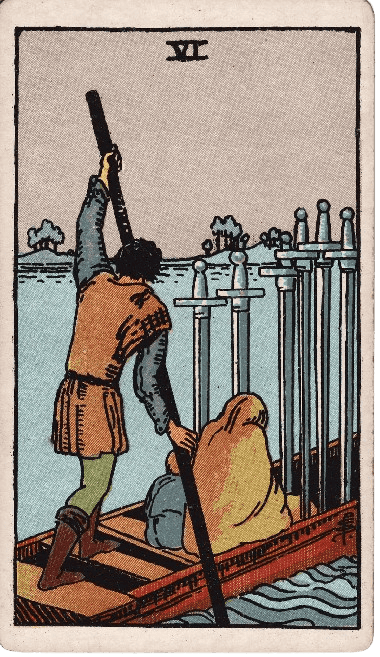
In the classic imagery, there’s a boat, a ferryman, and passengers crossing from choppy water into something calmer. That scene captures the essence of the upright meaning: you’re in transition. You may still feel the weight of what you’ve lived through, but you’re actively choosing peace, even if peace is unfamiliar.
Sometimes this card shows up during literal travel. Moving homes. Relocating for work. Taking a trip that gives you perspective. Getting out of an environment that has been draining you. But it can also be entirely internal. You might be leaving behind a painful mindset, a pattern of conflict, a relationship dynamic that keeps looping, or even an identity that was built around survival.
The Six of Swords is especially common when you’re healing from something you didn’t ask for. A breakup you didn’t want, but now you know you needed. A job that used to be fine until it wasn’t. A friendship that slowly turned into something exhausting. Upright, this card says: it’s okay to move on without a perfect ending. You don’t need everyone to understand. You just need to choose what helps you breathe.
There’s also a gentle theme of support here. The ferryman matters. This card often suggests help from someone who guides you through the transition, a therapist, a mentor, a friend who texts at the right time, a community that reminds you you’re not alone. Sometimes the support is practical. Sometimes it’s emotional. Either way, the message is: you do not have to do this alone.
The upright Six of Swords is progress. It’s hope with an action plan. It’s recovery, not instant, not flashy, but real.
Six of Swords Reversed Meaning
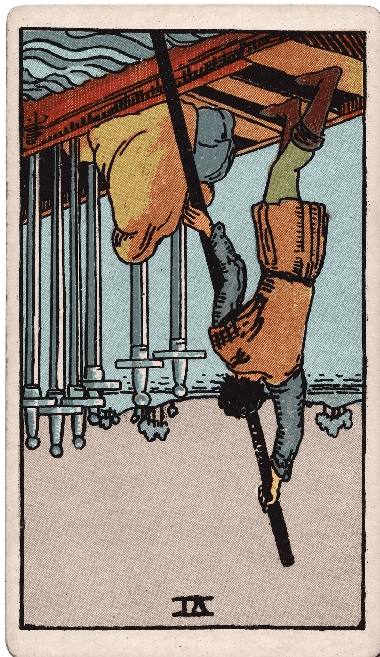
Reversed, the Six of Swords is what it looks like when you want to move on, but something keeps snagging you. It might be fear. It might be guilt. It might be old grief that you have not fully named yet. Or it might be that weird human thing where the past feels familiar, even when it was painful, and the unknown feels like a bigger threat.
This reversal often points to a natural resistance to change. You might be staying in a situation that hurts because leaving feels complicated. Or you might be trying to move forward physically while still carrying the emotional baggage, which creates this frustrating sense of repetition. Like you changed your scenery, but the same story followed you.
Sometimes reversed is literal: delays in travel, postponed moves, setbacks in plans. But more often it’s emotional. You may feel caught between departure and arrival. Part of you wants to let go, and part of you keeps replaying what happened, hunting for the missing piece that will make it all make sense.
The reversed Six of Swords can also show up when there’s unfinished business. Maybe a conversation you keep avoiding. Maybe grief you’ve been stuffing down because you don’t have time to feel it. Maybe resentment you’ve been carrying because you never got closure. This card isn’t demanding you “forgive and forget.” It’s asking you to stop pretending you’re fine when you’re not.
Another layer here is the idea of carrying old issues into new environments. You might be repeating patterns in relationships. You might be bringing the same stress response into every workplace. You might be expecting new people to pay for what old people did. That’s not a moral failing. It’s a sign you’re still healing.
Reversed, the Six of Swords is a nudge toward inner work. Therapy, reflection, boundaries, honest conversations, making peace with what you cannot change. The message is: you can’t reach calmer waters if you keep rowing back toward the storm.
Ultimately, this card reversed reminds you that holding on to what hurts will never feel like safety. It will just feel like stagnation. You deserve movement. You deserve relief. And yes, you can get there, but you may have to put something down first.
Six of Swords Symbolism
In the Rider-Waite-Smith deck, the Six of Swords shows a ferryman steering a small boat across water. A cloaked figure and a child sit inside, turned away from us, while six swords stand embedded in the vessel.
The boat is the most obvious symbol: it represents transition, the journey itself. Not a destination, not a final answer, but movement.
The water is a visual metaphor for emotional terrain. On one side, it’s choppy, suggesting conflict, stress, grief, or mental turbulence. On the other, it smooths out, suggesting relief and clarity. That contrast is the whole message of the card. You may not be fully “over it,” but you are moving toward peace.
The figures matter too. The person in the cloak could mean sadness, protection, or pulling away, like when you stop talking to think about something important. The child stands for hope and new beginnings, but also for weakness. The child represents hope and new beginnings, but also weakness. Transitions are hard even when they’re necessary.
Then there are the swords. This is the detail that keeps the card honest. The swords are not left behind. They come with you. That can symbolize memories, mental patterns, worries, and the lessons you cannot unlearn. The Six of Swords isn’t saying you magically become a different person overnight. It’s saying you carry what you’ve learned into the next chapter, and you get to decide whether those lessons make you wiser or heavier.
Finally, the ferryman represents guidance. Help. Support. A steady hand when you’re tired of steering alone. Sometimes the best choice you can make is letting someone help you cross.
The Six of Swords in a Yes No Reading
In a yes no reading, the Six of Swords usually leans toward yes, but with a very specific flavor. It’s a yes to moving on. A yes to choosing peace. A yes to the option that gets you out of the chaos, even if it isn’t perfect.
If your question is about leaving a situation, starting over, creating distance, or making a transition, upright Six of Swords is often a supportive yes. It suggests you’re being guided toward calmer waters. It’s a “yes, go” that also gently reminds you that change can be bittersweet. You can miss what you left and still know it was right.
If the card appears reversed, the answer is more likely no or not yet. Not because you’re doomed, but because something is unresolved. You might be resisting the move you already know you need. Or you might be trying to move forward without doing the emotional work that makes the move stick. Reversed, the Six of Swords asks you to deal with the baggage first, or at least acknowledge it honestly.
So, yes no wise: upright is yes, especially for transitions and healing. Reversed is not yet, urging clarity, closure, and less avoidance.
Six of Swords in a Love Reading
In love readings, the Six of Swords is about healing, distance, and the decision to move toward peace. Upright, it often shows up after conflict, heartbreak, or a messy emotional season. For couples, it can mean you’re entering calmer waters together. Maybe you’ve had the hard conversations. Maybe you’ve chosen a healthier dynamic. Maybe you’re learning how to stop fighting the same fight.
It can also signal a necessary departure. Sometimes the best thing to do is to break up, especially if the relationship is always causing you stress. The Six of Swords says, “Choose peace.” Choose healing. Choose whatever makes you feel emotionally safe again.
For singles, this card often means that you are moving on from a broken heart. Even if you still feel sore, this is a sign that you’re getting better. You might be making room in your heart so you can accept something new without bringing old pain with you.
Reversed, the Six of Swords suggests unresolved baggage in love. Difficulty letting go of an ex. A relationship stuck in the same loop. Avoided conversations that keep piling up until intimacy feels impossible. It can also mean that someone is emotionally distant, which means they are physically there but mentally elsewhere.
Reversed, the advice is simple but hard: you can’t get better if you act like the wound isn’t there. To find real peace, you might need closure, honest talk, or some time apart.
Six of Swords in a Career Reading
In career readings, the upright Six of Swords often points to a transition that brings relief. Leaving a stressful job. Moving into a more balanced environment. Shifting roles. Starting fresh. Sometimes it is literally relocation tied to work. Sometimes it is changing industries, changing teams, or changing your relationship with work itself.
This card can also suggest mentorship or guidance. A manager who helps you grow. A colleague who shows you the ropes. A coach who helps you see your options clearly. The Six of Swords reminds you that you don’t have to struggle in silence to prove you’re strong.
Reversed, career energy can feel stuck. You might be in a job that drains you, but you resist leaving because it feels risky. Or you might be trying to move forward but hitting delays, bureaucracy, or lack of support. This reversal can also show up when you carry stress patterns from job to job, like expecting every workplace to be hostile because the last one was.
Reversed, the card asks: what is unfinished here? A project you need to wrap up? A boundary you need to set? A fear you need to face? Progress is possible, but it may require a more direct approach.
Six of Swords in a Financial Reading
Financially, the Six of Swords upright suggests gradual recovery. It’s not the card of instant miracles. It’s the card of steady improvement. Paying down debt. Creating a plan. Getting back on track after a tough time. It can also mean making a financial change that makes life less stressful, like moving to a place that costs less or putting more emphasis on long-term peace.
Reversed, the Six of Swords can point to financial delays, setbacks, or repeating unhealthy habits. Old debts resurfacing. Avoiding budgets. Spending as a coping mechanism. Or simply feeling stuck because the recovery is slower than you want it to be.
The reversed message is not “you’re failing.” It’s “don’t avoid the truth.” Face the numbers. Ask for help if you need it. Stop carrying financial burdens forward when you could start lightening them now.
Spiritual Meaning of the Six of Swords
Spiritually, the Six of Swords is the quiet passage from confusion to clarity. Upright, it suggests you’re integrating lessons, releasing what no longer fits, and learning how to trust the process even when the path is not perfectly mapped. It can also indicate guidance from mentors, teachers, or spiritual supports that help you move through a difficult season.
This card often appears after spiritual burnout. After doubt. After a period where you felt disconnected from yourself. Upright, it says: you’re finding your way back, and it’s okay that it’s slow.
Reversed, the spiritual message is about resistance. Avoiding shadow work. Denying pain. Clinging to beliefs that no longer serve your growth because they feel familiar. The reversed Six of Swords asks for courage, not perfection. Courage to sit with discomfort. Courage to admit what isn’t working. Courage to stop rowing back toward old versions of yourself.
Spiritual growth is not always a sunrise. Sometimes it is a small boat, steady water, and the decision to keep going anyway.
Cosmic Connections of the Six of Swords
Element: Air, this card is connected to your thoughts, how you talk to people, your mental patterns, and the stories you tell yourself. The Six of Swords usually means a change in how you think, not just in your situation.
Numerology: Six stands for balance, harmony, and responsibility. In the Swords suit, that peace often comes from making a hard but necessary choice to keep things calm.
Astrology: Mercury in Aquarius, emphasizing forward-thinking, perspective shifts, and the ability to detach enough to choose what’s healthiest. Aquarius brings the “bigger picture” view, while Mercury brings movement in the mind, ideas, and communication.
Together, these correspondences reinforce the Six of Swords as a card of mental clarity and necessary transition. It’s the moment you stop debating the obvious truth and start moving toward it.
Questions to Ask When the Six of Swords Appears
What do I need to release so I can move forward with less weight?
Where am I resisting change, and what am I afraid will happen if I let go?
What does peace look like for me, practically and emotionally?
Who or what is guiding me through this transition, and am I letting myself receive support?
What lesson am I carrying into the next chapter, and what am I ready to leave behind?
The Bottom Line
The Six of Swords is a card of transition, healing, and choosing calmer waters after difficulty. Upright, it brings relief, guidance, and forward motion. It reminds you that change can be hard and still be the right thing to do. If you flip it over, it shows how being resistant, putting things off, and not dealing with your problems can keep you stuck, even when you know you want peace.
At its core, the Six of Swords teaches trust. Not blind trust in other people, but trust in your own ability to move forward. Trust that you can survive the crossing. Trust that you do not have to keep suffering just because you are used to it. There is a safer shore ahead, and you are allowed to go there.