Introduction to the Four of Swords Tarot Card
The Four of Swords is the tarot card version of your body grabbing your laptop, gently closing it, and saying, “We’re done for today.” Not because you’re lazy. Not because you’re failing. Because your nervous system is officially out of tabs to keep open.
This card lives in the Minor Arcana, inside the suit of Swords, which is Air energy: thoughts, logic, stress spirals, mental arguments you have in the shower, and the whole “I’ll sleep when I’m dead” mindset that always sounds cooler than it actually feels. When the Four of Swords shows up, it’s usually after a stretch of conflict, pressure, or emotional noise. It’s the pause after the push. The quiet room after the loud room.
And look, “rest” can sound like a beige suggestion you’ll ignore until your eye starts twitching. But this card isn’t asking you to be precious about self-care. It’s asking you to be practical. It’s saying: you can’t clarity your way out of exhaustion. You can’t force a breakthrough with a brain that’s running on fumes. Healing and reflection are not the break from life. They’re part of how life works.
So whether you’re coming off a tense season, a personal upheaval, or just the daily grind of being a sentient adult, the Four of Swords is your permission slip. Step back. Breathe. Recover. The world will still be there when you come back. You’ll just return with your mind intact.
Four of Swords Keywords
Upright: Rest, recovery, retreat, contemplation, solitude, healing
Reversed: Burnout, stagnation, restlessness, avoidance, refusal to heal
Upright is the intentional pause. Reversed is when you either cannot stop, or you stop so hard it becomes a hiding place.
Four of Swords Upright Meaning
When the Four of Swords lands upright, it’s a clear message: you need rest, and not the fake kind where you “relax” while planning tomorrow in your head. Real rest. The kind that actually lowers your shoulders and unclenches your jaw. If you need a reality check on what real rest looks like, this guide on how much sleep you actually need is a solid baseline.
Usually, this card shows up after you’ve been in battle mode. Maybe literal conflict, maybe emotional turbulence, maybe just months of trying to hold everything together with sheer willpower and caffeine. The Four of Swords is the moment you lay the sword down and admit you’re not a machine. It’s not dramatic. It’s honest.
In everyday life, this can look like taking a break from social plans, pulling back from a project, or choosing quiet over constant input. It can also be a sign that your mind needs a reset. If you’ve been thinking in loops, revisiting the same conversation, the same fear, the same “what if” over and over, this card says: stop feeding it. Go still. Let your system settle long enough for the truth to surface without being forced.
The upside of this card is that the pause is productive, even if it doesn’t look productive. You’re integrating. You’re processing. You’re letting the emotional bruises heal without poking them every five minutes to see if they still hurt. (They do. Stop.)
Sometimes the Four of Swords is also about recovery in the literal sense: healing from illness, exhaustion, grief, heartbreak, or just a stretch of life that asked too much of you. It’s the card that reminds you that restoration is not optional. It’s maintenance. If you don’t schedule rest, life will schedule it for you, and it will be less cute about it.
This is also a card of solitude that isn’t lonely. It’s the kind of alone time that feels like coming home to yourself. Meditation, journaling, walking without headphones, napping with your phone in another room, staring at the ceiling and letting your mind finally stop performing. All of that counts.
Upright, the Four of Swords says: retreat on purpose. Heal on purpose. Don’t wait until you’re falling apart to treat yourself like someone worth caring for.
Four of Swords Reversed Meaning
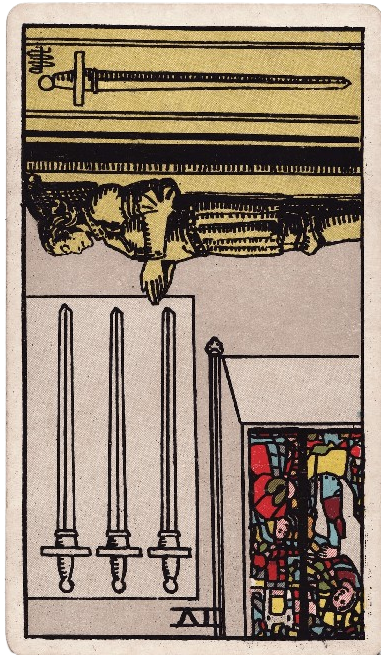
Reversed, the Four of Swords is the warning label. It’s what happens when rest is needed, and you ignore it, resist it, or use it as a way to avoid your life entirely.
One version of this reversal is burnout. You’re tired, but you keep going anyway. You tell yourself you’ll slow down “after this week,” and then next week shows up wearing a fake mustache like, surprise, it’s also this week. The reversed Four of Swords can point to overstimulation, stress-related health issues, and emotional overload. It’s the body tapping the mic: “Hello. Are you listening? We’re not okay.”
Another version is restlessness. You try to rest, but you can’t. You’re physically still, but mentally sprinting. Your brain is running scenarios, replaying mistakes, doom-scrolling for “information,” and calling it “staying on top of things.” This reversal can show up when you’re stuck in anxiety mode, where stillness feels unsafe because it means you might actually have to feel what you’ve been avoiding.
And then there’s the third flavor: avoidance disguised as recovery. You might be hiding in “rest” to dodge a decision, a conversation, or a necessary next step. You’re not recharging, you’re stalling. The reversed Four of Swords can be a gentle nudge to ask: am I healing, or am I disappearing?
In relationships, this reversal can look like emotional withdrawal, stonewalling, refusing to talk, or taking “space” that never turns into actual repair. In career or life direction, it can look like being stuck in neutral because you’re scared to move, or too depleted to trust yourself.
The message here isn’t “never rest.” It’s “rest with intention.” If you’ve been pushing too hard, you need to stop before you snap. If you’ve been hiding, you need to re-enter your life with more honesty. Either way, balance is the goal. You’re not meant to live in constant battle mode. You’re also not meant to live in permanent retreat.
Four of Swords Symbolism
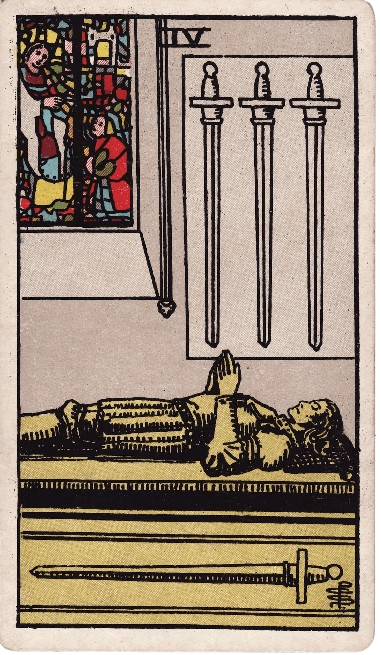
In the Rider-Waite-Smith deck, the Four of Swords shows a knight lying on a tomb, hands in prayer, with three swords hanging above and one sword beneath him. The scene is quiet, almost sacred, like a chapel moment. It’s not flashy. It’s intentional.
The knight represents the part of you that has been fighting. Maybe not literally, but emotionally or mentally. The posture suggests surrender, but not defeat. More like: “I am choosing to stop.” The hands in prayer position can signal reflection, healing, and the kind of inner conversation you can only have when everything else goes quiet.
The tomb is important because it looks final, but it isn’t. This isn’t death energy. This is a temporary retreat. A pause that restores you so you can return to life with more strength. Think of it as the world’s most dramatic “do not disturb” sign.
The three swords above often symbolize lingering mental stress, unresolved conflict, or the worries still hovering in the background. They haven’t vanished just because you’re resting. Rest is the method, not the denial.
The one sword beneath suggests readiness. Even while you’re resting, your strength is still there. You’re not giving up your power. You’re protecting it. The sword is placed, not discarded.
And then there’s the stained glass window, which often depicts a spiritual scene. It’s a reminder that rest can be sacred. Healing can be holy. Sometimes the most powerful move is to stop performing and let yourself be human.
Four of Swords in a Love Reading
In love readings, the Four of Swords usually means: pause. Breathe. Step back before you say something you cannot take back, or before you make a big emotional decision from pure exhaustion.
Upright, it can show a period of distance that’s meant to be restorative, not punishing. If you and your partner have been arguing, stressed, or out of sync, this card can suggest taking space to cool down and reflect. Not silent treatment. Not a power play. More like: “Let’s take a beat so we can come back to this with kinder minds.”
It can also show healing after heartbreak. If you’re single and still tender, this card doesn’t shame you for not wanting to jump back into dating. It’s the reminder that recovery is not something you rush just because your friends are “trying to get you out there.”
Reversed, the Four of Swords in love can suggest avoidance. Someone is withdrawing instead of communicating. There may be issues that keep getting pushed under the rug because talking about them feels hard. It can also indicate restlessness, anxiety about where things are going, or a sense of being stuck in limbo.
The question this card asks in love is simple: is the space between you creating clarity, or creating distance that becomes a habit?
Four of Swords in a Career Reading
Career-wise, the Four of Swords is the card that shows up when your brain is begging for a day off. Upright, it can literally suggest taking a break, vacation, sabbatical, or even just a short pause to recover from an intense stretch of work.
It can also show stepping back from workplace conflict. If the environment has been tense, the Four of Swords advises retreating strategically. Not quitting impulsively. Not escalating. Just removing yourself long enough to think clearly and decide your next move without adrenaline running the meeting.
This card can also mean planning behind the scenes. Quiet productivity. Research, reflection, and rebuilding your strategy. Sometimes your next career step doesn’t come from grinding harder. It comes from letting your mind get quiet enough to hear your real priorities.
Reversed, this card screams burnout. Overwork, stress, ignoring your body, refusing to slow down. It can also show stagnation, where you feel stuck and drained and don’t know how to re-enter momentum. Or you might be procrastinating because you’re overwhelmed, and your avoidance is masquerading as “I’m just resting.”
Career message: pacing matters. If you want to last, you have to recover.
Four of Swords in a Financial Reading
With money, the Four of Swords is not the “go big” card. Upright, it suggests pausing before making major financial decisions. Review, reflect, plan. If you’ve been spending from stress or trying to fix anxiety with purchases, this is the card that says: slow down. Get quiet. Look at the numbers with a calm mind.
It can also indicate a temporary lull in finances. Not necessarily a disaster, but a period where movement is slower. Sometimes the best financial move is not a new investment. It’s about getting enough sleep, making a budget, and making a plan that makes sense.
Reversed, the Four of Swords can show financial stress fueled by overwork or avoidance. You might be grinding yourself into dust to chase stability. Or you might be avoiding money issues entirely, letting problems stack up because looking at them makes you anxious.
The financial wisdom here is straightforward: clarity comes from slowing down. You don’t fix money stress by panicking. You fix it by facing it with a rested brain.
Spiritual Meaning of the Four of Swords
Spiritually, the Four of Swords is sacred stillness. Upright, it often shows up when your soul is asking for quiet. Less seeking, more listening. Less consuming information, more integrating what you already know.
This can be a meditation season, a retreat season, a journaling season, a “I need to unplug so I can actually hear myself” season. If you’ve been spiritually overstimulated, watching ten different teachers, doing every ritual, chasing signs, this card says: simplify. Let silence do some of the work.
It can also appear during spiritual healing. When you’re recovering from grief, trauma, heartbreak, or a long period of stress, your spirit often needs rest as much as your body does. The Four of Swords is permission to be gentle with yourself. Not performative gentle. Real gentle.
Reversed, this card can show resistance to inner work. You might avoid silence because you’re afraid of what comes up. Or you might be bouncing between practices, never staying long enough for anything to land. It can also suggest spiritual stagnation, where retreat becomes isolation and healing turns into hiding.
The lesson is the same: rest is sacred. But it’s meant to restore you, not remove you from your life.
The Four of Swords in a Yes No Reading
In a yes-no reading, the Four of Swords is rarely a loud, enthusiastic yes. It’s more like a pause button with good intentions.
Upright, it often leans maybe, not right now. It suggests that the timing is off, or that you need more rest and clarity before committing. If your question is about starting something, making a big decision, or pushing forward, this card can be a gentle “wait.” Not because it’s doomed. Because you’re depleted, and depleted choices are messy choices.
If your question is about whether you should take a break, step back, or give something space, upright Four of Swords leans yes. It’s basically the universe endorsing your nap.
Reversed, the answer depends on what’s happening. If you’re overworking and asking “Should I keep pushing?” the reversed Four of Swords leans no, because the burnout risk is real. If you’ve been stuck, hiding, or avoiding and asking “Is it time to re-engage?” it can lean yes, but with structure and small steps.
A helpful read is:
- Upright: Not yet. Rest first, then decide.
- Reversed: Something has to change. Either you stop pushing, or you stop hiding.
Cosmic Connections of the Four of Swords
Astrology: The Four of Swords is often associated with Jupiter in Libra, which sounds fancy until you translate it into real life: big-picture wisdom meets balance. Libra wants harmony. Jupiter expands whatever it touches. Together, they suggest that peace isn’t passive, it’s chosen. The retreat here is meant to restore equilibrium, not avoid reality.
Numerology: Four is structure, foundation, stability. It’s the sturdy table that holds your life up. In Swords energy, that stability comes through mental quiet, boundaries, and creating a container for recovery. You don’t “think” your way into stability. You build it.
Element: Air, because this card is deeply about the mind. Thoughts, stress, processing, and the mental space needed to regain perspective.
Cosmically, the Four of Swords is a reminder that balance is not a vibe. It’s a practice.
Questions to Ask When the Four of Swords Appears
- Where am I being asked to pause, even if my ego wants to keep going?
- What would real rest look like for me right now?
- Am I healing, or am I avoiding something that needs my attention?
- What conflict or stress am I still carrying in my body?
- What boundary would protect my peace this week?
The Bottom Line
The Four of Swords is the card that tells you to stop treating rest like a reward you earn after you collapse. Upright, it’s a deliberate retreat: recovery, reflection, and the quiet rebuilding of your strength. It shows up when you need to step back, not to disappear, but to restore your mind and body so you can move forward with clarity.
Reversed, it serves as a reality check. You might be pushing yourself toward burnout, or you might be hiding in stagnation because facing the next step feels overwhelming. Either way, the message is the same: balance is non-negotiable.
The Four of Swords isn’t here to slow your life down forever. It’s here to remind you that your nervous system is part of the plan. Rest is not a detour. This is how you get through the journey and enjoy the parts that are worth living.
The Four of Swords emphasizes the importance of rest as a means of recovery and reflection, advocating for a deliberate retreat to rebuild strength. When upright, it signifies the need to restore clarity for moving forward. In reverse, it serves as a warning against burnout or stagnation, underscoring the necessity of balance. Ultimately, this card reminds you that rest is essential for navigating life’s journey and enjoying meaningful experiences.