Introduction to the Three of Swords Tarot Card
The Three of Swords is one of those tarot cards that does not bother whispering. It walks in, points directly at the sore spot, and basically says, “Yep. That. We’re dealing with it.” Not to be cruel, but to be clear. This is a Swords card, so it’s tied to Air: truth, communication, intellect, and the stories we tell ourselves to stay comfortable. But the image is all heart. It’s where logic and emotion collide, usually at the worst possible time.
At first glance, the Three of Swords looks like heartbreak, grief, separation, betrayal, or an emotional gut punch you did not order. And yes, it can absolutely mark those moments. But it’s not only about suffering. It’s about clarity. About emotional release. About the healing that becomes possible once you stop pretending something does not hurt.
When this card appears, it often signals a difficult truth coming to light, an ending you can’t keep negotiating with, or an old wound cracking open so it can finally start to close in a real way.
Three of Swords Tarot Card Keywords
Upright: heartbreak, grief, separation, painful truth, emotional release, clarity through pain
Reversed: recovery, forgiveness, emotional resistance, self-healing, reconciliation, moving on
If you want the simplest read: upright is the moment the truth lands. Reversed is what happens after, when you start to heal, or realize you’ve been avoiding healing like it’s an awkward ex in the grocery store.
Three of Swords Upright Meaning
When the Three of Swords shows up upright, it usually means something hurts and it is no longer possible to ignore it. This is not subtle discomfort. This is the kind of emotional pain that interrupts your day, rewrites your mood, and makes you stare at the ceiling at night thinking, “Okay, so this is happening.”
People associate this card with romantic heartbreak, and fair. It can signal a breakup, betrayal, or the realization that love is not being returned in the way you hoped. But the Three of Swords is bigger than romance. It can also point to friendship disappointment, family tension, professional conflict, or grief over the loss of a dream, an opportunity, a version of life you were quietly planning on.
What makes this card so sharp is that it’s often tied to truth. A truth you hear. A truth you uncover. A truth you finally admit to yourself after months of bargaining. Upright, the Three of Swords insists on honesty. It brings pain into the open, not to make you feel bad, but to keep you from living in emotional limbo.
And here’s the twist: for all its intensity, this card can be cleansing. The Swords suit is about mental clarity, and clarity is sometimes brutal. The Three of Swords cuts through illusions, denial, and “maybe if I just try harder” fantasies. It says: let it be what it is. Face it. Name it. Grieve it. That is how you get free.
You’re allowed to be shattered for a minute. You’re also allowed to let that shattering reveal what was never stable in the first place. Pain is not the goal. But pain can be information. And information is what helps you make the next honest choice.
Three of Swords Reversed Meaning
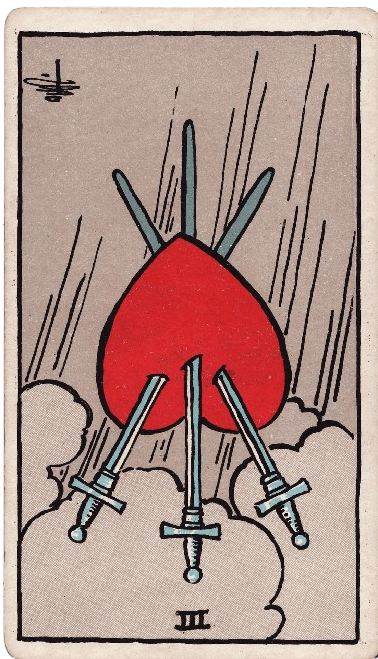
Reversed, the Three of Swords softens, but it doesn’t disappear. Think of it like the aftermath of a storm. The sky is still gray, the ground is still wet, but you can finally see a little farther down the road.
Often this reversal shows up when the worst has passed and recovery is underway. You may be processing grief, releasing resentment, or finding a way to forgive someone, including yourself. It can signal that you’re starting to feel stronger again, not because the past stopped mattering, but because it’s no longer actively bleeding into every moment.
Sometimes the reversed Three of Swords points to reconciliation. That can be romantic, platonic, or even professional. But it only works if it’s built on honesty and accountability. This card does not support pretending nothing happened. It supports repair. There is a difference.
Of course, reversed can also highlight emotional resistance. Maybe you’re numbing out. Maybe you’re “fine” in the way that means you’ve packed your feelings into a box and shoved it in the closet. Maybe you keep replaying the story but never actually feel what’s underneath it. Sometimes we cling to pain because it’s familiar, because letting it go means admitting the chapter is over.
The reversed Three of Swords asks: are you giving yourself space to heal, or are you protecting the wound because you don’t trust what comes next? The message is hopeful. Healing is possible. Moving on is possible. But it requires tenderness, honesty, and the willingness to stop using suffering as proof that something mattered.
Three of Swords Symbolism
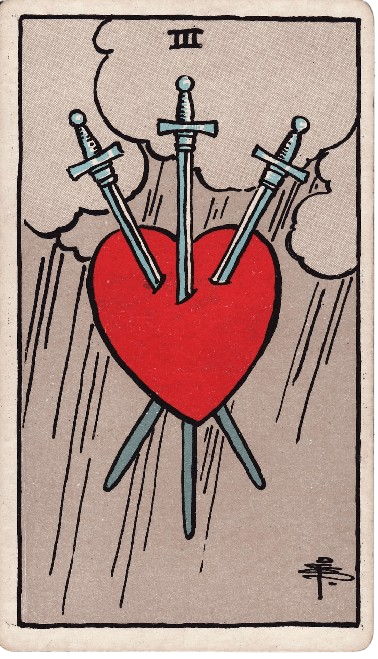
In the Rider-Waite-Smith deck, the Three of Swords is almost aggressively straightforward: a heart pierced by three swords, floating under a stormy gray sky. No people. No scenery. No side plot. Just the emotional truth, centered and unavoidable.
The heart is the obvious symbol of love, emotion, vulnerability, and our capacity to connect. The piercing shows pain that lands deeply, not just a passing annoyance. It’s heartbreak, grief, disappointment, the moment you realize something is not what you hoped it was.
The swords represent the mental edge of the Swords suit: thought, truth, communication, clarity. Here, that clarity hurts. These swords slice through illusion and strike at what is real. In a reading, that can look like hearing something you didn’t want to hear, discovering something you can’t unsee, or finally admitting the truth you’ve been circling.
The stormy sky mirrors emotional turmoil. It’s sorrow, chaos, and the heavy feeling of “I can’t believe this is my life right now.” But storms also imply movement. They pass. The card doesn’t promise instant relief, but it hints that the weather will change.
And the fact that there are no figures matters. This pain is universal. Heartbreak is not a personal failing. It’s a human experience. The heart is pierced, but it still exists. It’s still there. That’s resilience, even if it doesn’t feel like it in the moment.
Three of Swords in a Love Reading
In love readings, the Three of Swords is the card people dread, and honestly, that makes sense. Upright, it can signal heartbreak, separation, betrayal, or a painful realization that changes the emotional landscape. Sometimes it’s a breakup. Sometimes it’s discovering dishonesty. Sometimes it’s not dramatic at all, just the slow dawning understanding that you’re not being met, and you’ve been trying to talk yourself out of caring.
It can also point to misunderstandings and harsh words. Swords rule communication, and this card can show up when something is said that cannot be unsaid. It may highlight old wounds, too, like you’re in a new relationship but reacting from an old one, flinching at shadows because you’ve been burned before.
Reversed, the Three of Swords leans into healing. It can mean forgiving someone, letting go of your feelings, and the long process of opening up again. For some people, it can mean making up, but only if there is real accountability and a desire to rebuild trust one step at a time. For single people, reversed often means getting over a broken heart and finally being ready to be vulnerable again.
Either way, the lesson is blunt but useful: love requires truth. And sometimes truth stings before it soothes.
Three of Swords in a Career Reading
In career readings, the upright Three of Swords can indicate disappointment, conflict, rejection, or a painful truth about your professional path.It could be a job loss, a missed chance, a project that doesn’t work out, or a partnership that falls apart under stress. It’s not always about what happened; sometimes it’s more about what you learned: you’re not getting paid enough, you’re not valued enough, or you’re stuck in a place that drains you.
This card often appears when expectations collide with reality. Maybe you thought the team was aligned and it’s not. Maybe you assumed you’d be promoted and you weren’t. Maybe you’re seeing office politics, broken promises, or unfairness more clearly now, and that clarity hurts because it means you can’t go back to pretending.
Reversed, the Three of Swords suggests recovery and forward momentum. You may be bouncing back from a setback, finding a new role, repairing a professional relationship, or simply gaining clarity about what you actually want. It can also signify leaving a toxic environment and realizing, with surprise, how much lighter you feel.
The bigger message here is that setbacks are temporary, even when they bruise your confidence. Painful clarity can be a turning point. Not because suffering is noble, but because truth is useful. It shows you what needs to change.
Three of Swords in a Financial Reading
Financially, the spiritual meaning changes to healing and bringing things together. It can mean letting go, forgiving, and feeling like your karma is clear. You might be learning how to be nice to yourself, how to stop punishing yourself for feeling, and how to turn what you’ve been through into knowledge instead of a burden.
It can also show up as the pain of realizing you need to change your habits, renegotiate a situation, or face your numbers honestly instead of avoiding them and hoping they behave.
Reversed, this card leans toward recovery. You may be rebuilding after a setback, paying down debt, resolving a dispute, or making a plan that finally feels doable.It doesn’t promise you a lot of money right away, but it does reassure you that your money problems won’t last forever. Things can get better if you are patient and clear.
The lesson is simple: face what’s real without shame. Small steps count. Consistency counts. And you are allowed to make progress without being perfect.
Spiritual Meaning of the Three of Swords
Spiritually, the Three of Swords is a tough teacher, but a real one. Upright, it represents the pain that comes from confronting truth and illusion. It asks you to sit with discomfort without trying to bypass it. No “everything happens for a reason” band-aids. No pretending you’re above grief. Just the honest experience of being human.
This card can show a time when your beliefs are put to the test in real life, not just in theory. It can also be a form of emotional purification. Heartbreak cracks you open. It makes it harder to numb out. It makes it harder to lie to yourself. It can deepen empathy, not as an idea, but as something lived.
Reversed,The spiritual meaning changes to healing and bringing things together. It can mean letting go, forgiving, and feeling like your karma is clear. You might be learning how to be nice to yourself, how to stop punishing yourself for feeling, and how to turn what you’ve been through into knowledge instead of a burden.
At its core, the Three of Swords teaches resilience. It says: yes, this hurts. And you are still here. You are still capable of love, connection, and trust, even if you need time before you believe that again.
The Three of Swords in a Yes No Reading
In a yes-no reading, the Three of Swords is usually a no, or a “not like this.” Upright, it often signals pain, conflict, or a truth that needs to be faced before moving forward. If you’re asking, “Should I pursue this?” the card may be warning that the situation is likely to bring disappointment or emotional fallout, especially if you’re ignoring red flags or hoping the outcome will magically change.
That doesn’t mean the card is here to ruin your day. It’s here to protect your clarity. Sometimes the answer is no because what you want is not aligned with what’s true. Sometimes it’s no because the timing is wrong. Sometimes it’s no because you need more information and an honest conversation before taking another step.
Reversed, the answer could go from yes to maybe. It can mean getting better, healing, and moving on, but only if you’ve dealt with the pain and learned from it. If your question is about getting back together, “reversed” can mean a careful yes, but it’s important to be clear about who is in charge and what the rules are. If your question is about starting again after heartbreak, reversed can be a gentle yes, with the reminder to go slowly and take care of your heart.
Cosmic Connections of the Three of Swords
Astrology: The Three of Swords is often connected to Saturn in Libra, which makes sense. Saturn teaches us things, sets limits, gives us duties, and makes us face the truth. Libra is in charge of relationships, fairness, balance, and working together. It can show painful truths about relationships, karmic lessons about commitment, and the burden of learning what balance really means.
Numerology: Three is usually growth, creativity, expression. Here, it shows how growth can be sparked by pain. Heartbreak can force you to say what you need. Disappointment can push you to choose yourself. It’s not romantic, but it’s real.
Element: Air, the realm of thought, communication, and truth. This card is mental clarity meeting emotional reality, and it insists you stop lying to yourself.
Questions to Ask When the Three of Swords Appears
- What truth am I avoiding because it hurts, and what would change if I faced it?
- What part of this pain is mine to process, and what part belongs to someone else?
- Where do I need forgiveness, and can I begin with myself?
- How am I coping right now, and is it helping me heal or keeping me stuck?
- What would emotional honesty look like today, in one small, doable step?
The Three of Swords doesn’t demand that you “get over it.” It asks you to get real with it.
The Bottom Line
The Three of Swords is a stark reminder that truth and pain sometimes arrive together. Upright, it highlights heartbreak, grief, separation, and the kind of emotional clarity that hits hard. It’s not gentle, but it is honest. And honesty is what makes healing possible.
Reversed, the card gives hope. It means getting better, forgiving, letting go, and the long road to trusting yourself and other people again. It sometimes suggests that we should come back together. At other times, it can mean moving on and accepting things. In either case, it reminds you that heartbreak doesn’t last forever. It’s a passage.
This card teaches that storms will pass, even when they seem to last forever. Pain is never fun, but it can change you. It can help you see through illusions, strengthen your boundaries, deepen your compassion, and lead you back to a more real version of your life. If you want a deeper dive into the imagery behind classic tarot decks, you can explore how emotional pain and heartbreak affect the mind and body through a psychological lens.